Turnkey Construction Contractor
How to Reduce Construction Material Waste: Practical Construction Waste Management Tips
IntroductionIn the construction industry, material waste is one of the biggest reasons for increased project costs and delays. Whether it’s cement, steel,…
Turnkey Construction Contractor
Talk to our team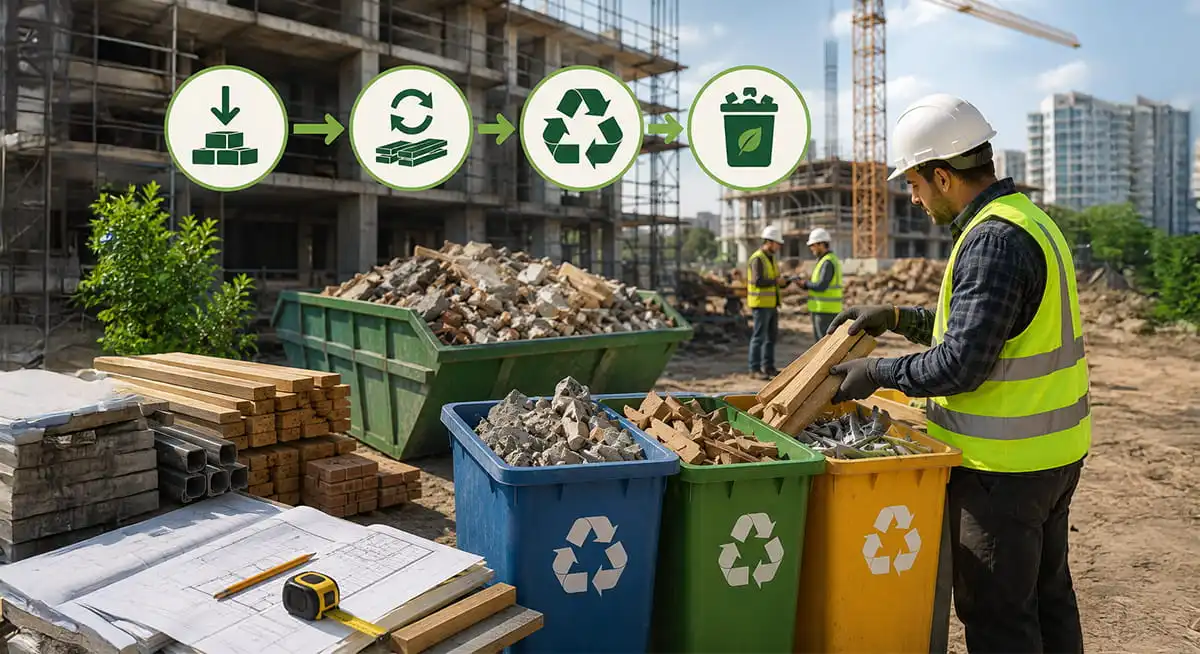
Introduction
In the construction industry, material waste is one of the biggest reasons for increased project costs and delays. Whether it’s cement, steel, bricks, wood, or tiles, wasted materials can quickly eat into your budget and reduce profits.
Effective construction waste management helps builders, contractors, and project managers save money, improve efficiency, and reduce environmental impact. By following a few simple practices, companies can reduce construction material waste and complete projects more successfully.
In this article, we’ll share practical and easy-to-follow construction cost-saving tips that can help minimize waste on any construction site.
Why Construction Waste Management Matters
Construction waste affects more than just your budget. Poor waste management can lead to:
- Higher material costs
- Project delays
- Increased disposal expenses
- Lower profit margins
- Environmental pollution
A strong construction waste management strategy helps businesses reduce losses and improve overall project performance.
1. Plan Carefully Before Construction Begins
One of the most effective ways to reduce construction material waste is through proper planning.
Before starting a project:
- Review drawings and designs carefully
- Verify measurements and dimensions
- Prepare accurate material estimates
- Identify potential risks and challenges
Good planning helps prevent ordering mistakes and reduces the likelihood of costly rework later.
Construction Cost-Saving Tip:
Always double-check material quantities before placing orders.
2. Order Materials Accurately
Over-ordering is a common cause of waste in construction projects.
While keeping a small safety margin is important, ordering excessive materials often results in unused stock that may never be utilized.
To reduce waste:
- Use detailed quantity calculations
- Review historical project data
- Order materials in stages when possible
Accurate purchasing is a simple but powerful way to reduce construction material waste and control costs.
3. Store Materials Properly
Improper storage can damage valuable materials before they are used.
Common examples include:
- Cement hardening due to moisture
- Steel rusting
- Wood warping
- Tiles cracking or breaking
Best Practices for Material Storage
- Store materials in covered areas
- Protect supplies from rain and sunlight
- Use pallets to keep materials off the ground
- Organize materials for easy access
Proper storage is a key part of successful construction waste management.
4. Train Workers on Material Handling
Many construction materials are wasted because of poor handling practices.
Workers should understand how to:
- Move materials safely
- Prevent breakage
- Use cutting tools efficiently
- Follow installation guidelines
Investing in worker training helps reduce damage and supports better construction waste management.
5. Improve Communication on the Job Site
Poor communication often leads to mistakes that require demolition and rework.
Common issues include:
- Incorrect measurements
- Wrong material installation
- Misunderstood instructions
Regular meetings between supervisors, engineers, contractors, and workers help ensure everyone is aligned and working toward the same goals.
Better communication means less waste and fewer costly mistakes.
6. Use Materials Efficiently
Smart material usage is one of the easiest ways to reduce construction material waste.
Examples include:
- Planning tile layouts before cutting
- Optimizing steel cutting schedules
- Reusing formwork whenever possible
- Using leftover materials for smaller tasks
Small improvements can result in major savings over the course of a project.
7. Monitor Material Usage Regularly
Tracking material consumption allows project managers to identify waste before it becomes a serious problem.
Monitor:
- Materials delivered
- Materials used
- Remaining inventory
- Damaged materials
Regular audits are an important part of effective construction waste management.
Construction Cost-Saving Tip:
Conduct weekly inventory checks to identify unusual material losses early.
8. Reduce Rework and Construction Errors
Rework is one of the most expensive forms of construction waste.
Common causes include:
- Poor workmanship
- Inaccurate measurements
- Lack of supervision
- Misinterpretation of designs
To avoid rework:
- Inspect work regularly
- Follow quality control procedures
- Verify measurements before installation
Doing the job correctly the first time helps reduce construction material waste and labor costs.
9. Recycle and Reuse Construction Materials
An important part of modern construction waste management is finding ways to recycle and reuse materials.
Examples include:
- Recycling steel scraps
- Reusing wood formwork
- Crushing concrete for reuse
- Recycling packaging materials
Recycling reduces landfill waste and can lower disposal expenses.
10. Use Technology to Minimize Waste
Modern technology can improve project planning and material tracking.
Useful tools include:
- Construction management software
- Material tracking systems
- Digital estimation tools
- Building Information Modeling (BIM)
Technology helps improve accuracy, reduce errors, and support more efficient construction waste management practices.
Common Mistakes That Increase Construction Waste
Avoid these costly mistakes:
❌ Ordering too many materials
❌ Poor storage conditions
❌ Lack of worker training
❌ Inaccurate measurements
❌ Poor communication
❌ No inventory tracking system
❌ Ignoring recycling opportunities
Avoiding these issues can significantly reduce construction material waste and improve profitability.
Environmental Benefits of Reducing Construction Waste
Besides saving money, reducing waste helps:
- Lower landfill usage
- Reduce carbon emissions
- Conserve natural resources
- Support sustainable construction practices
Today, many clients prefer contractors who prioritize sustainability and responsible construction waste management.
Conclusion
Reducing material waste is one of the smartest ways to improve project efficiency and profitability. Through proper planning, accurate material ordering, effective storage, worker training, and regular monitoring, construction companies can significantly reduce construction material waste.
Implementing these practical construction cost-saving tips not only lowers expenses but also creates a safer, more sustainable, and more productive work environment. A strong construction waste management strategy benefits your business, your clients, and the environment.
FAQs
Construction waste management is the process of reducing, reusing, recycling, and properly disposing of construction materials to minimize waste and improve efficiency.
You can reduce waste through proper planning, accurate material estimation, efficient storage, worker training, quality control, and recycling practices.
Common causes include over-ordering, poor storage, handling damage, inaccurate measurements, and construction rework.
Yes. Reducing waste lowers material costs, disposal expenses, and labor costs, making it one of the most effective construction cost-saving tips.
It improves project profitability, reduces environmental impact, enhances efficiency, and supports sustainable construction practices.

More reading
Related articles.
More writing from the team on construction in India.
All articles