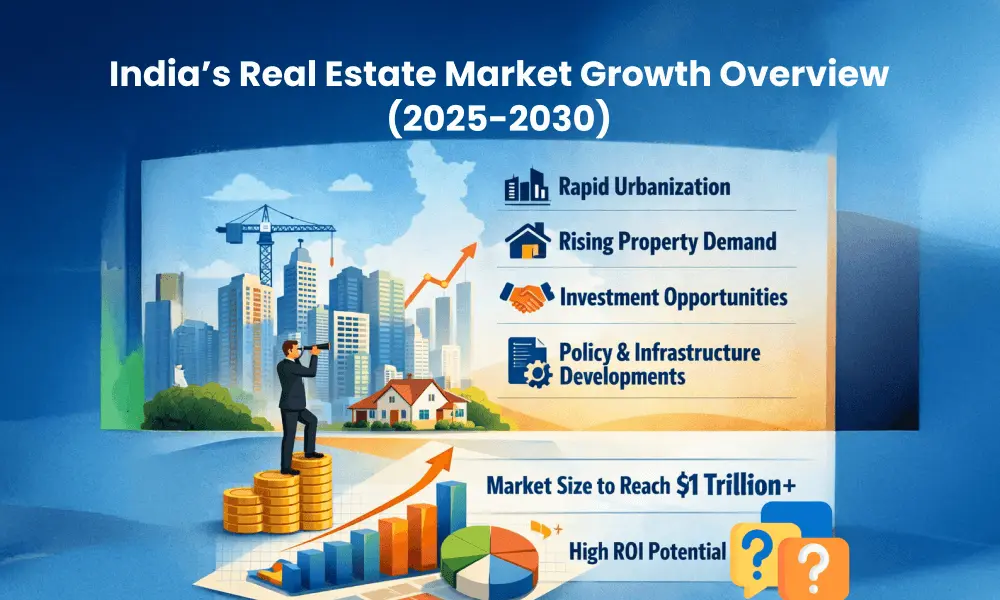

India’s real estate and construction industry is entering a high-growth phase between 2025 and 2030, driven by rapid urbanization, infrastructure investment, housing demand, and evolving business needs. For developers, investors, corporates, and industrial players, understanding these trends is critical for timely, cost-effective, and scalable project execution.
This blog outlines the key growth drivers, emerging opportunities, and strategic considerations businesses should know while planning construction and real estate projects in India.
India’s Real Estate Market: Growth Outlook (2025–2030)
The Indian real estate sector is expected to witness steady and diversified growth across residential, commercial, industrial, and infrastructure segments. Key highlights include:
- Expansion beyond metro cities into Tier II & Tier III cities
- Rising demand for commercial offices, warehouses, and industrial facilities
- Strong push for infrastructure-led development
- Increased adoption of technology-driven and turnkey construction models
Key Drivers Fueling Growth
1. Urbanization & Population Shift
India continues to see large-scale migration toward urban centers. This is creating demand for:
- Residential housing
- Office spaces
- Urban infrastructure
- Mixed-use developments
2. Infrastructure-Led Development
Government focus on highways, metro rail, airports, industrial corridors, and smart cities is directly boosting real estate growth and construction activity.
3. Growth of Commercial & Industrial Real Estate
- IT parks, corporate offices, data centers
- Warehouses & logistics hubs (driven by e-commerce)
- Manufacturing and industrial facilities
These projects demand fast execution, strict timelines, and cost control, making turnkey construction increasingly popular.
4. Rise of Tier II & Tier III Cities
Cities beyond metros are becoming new growth hubs due to:
- Lower land costs
- Improved connectivity
- Growing business activity
This trend opens opportunities for developers and businesses looking to scale efficiently.
5. Increased Focus on Sustainability
Green buildings, energy-efficient designs, and sustainable construction practices are becoming standard expectations rather than optional features.
What Businesses Should Know Before Investing or Building
1. Speed & Execution Matter More Than Ever
In a competitive market, delayed projects lead to revenue loss. Businesses need single-point responsibility and streamlined execution.
2. Cost Control Is a Major Challenge
Fluctuating material prices and labor costs require robust planning and transparent budgeting.
3. Compliance & Approvals Can Delay Projects
Navigating regulations demands experienced project management and coordination.
4. Turnkey Construction Is Gaining Preference
Turnkey solutions reduce:
- Coordination issues
- Timeline overruns
- Cost uncertainties
while ensuring accountability from design to handover.
How Turnkey Construction Helps Businesses Capitalize on Growth
Turnkey construction offers:
- End-to-end project responsibility
- Better budget predictability
- Faster project delivery
- Improved quality and safety control
For businesses planning projects between 2025 and 2030, turnkey execution ensures speed, reliability, and scalability in a growing market.
Conclusion
India’s real estate market between 2025 and 2030 presents significant opportunities for businesses ready to act strategically. Success will depend on informed decision-making, efficient execution, and choosing the right construction partner.
At Bluewing DCPL, we help businesses navigate this growth with end-to-end turnkey construction solutions, delivering projects on time, within budget, and to the highest standards.
FAQs:
India’s real estate market is expected to grow steadily across residential, commercial, and industrial segments, supported by infrastructure development and urban expansion.
Apart from metro cities, Tier II and Tier III cities will play a major role due to improved infrastructure and rising business activity.
Commercial offices, warehouses, industrial facilities, and mixed-use developments offer strong growth potential.
Turnkey construction reduces delays, controls costs, and provides single-point accountability, which is crucial in fast-growing markets.
By choosing experienced construction partners, planning budgets carefully, adopting sustainable practices, and focusing on timely execution.