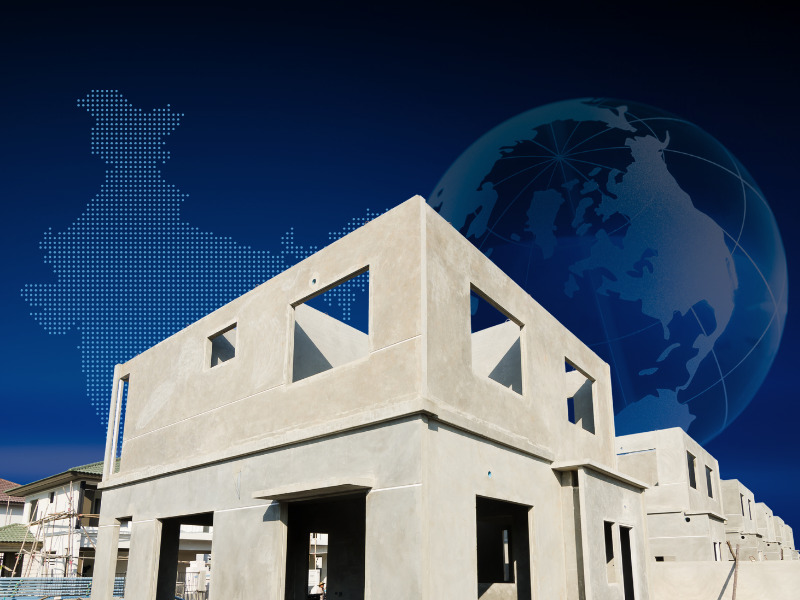

Precast concrete is reshaping construction around the world, from automated factories in Europe to large-scale modular housing in China. While India produces and even exports precast elements internationally, domestic adoption remains relatively modest. Let us dive deeper into how India compares with global markets and examine key differences in scale, adoption drivers, technology use, and future direction. Along the way, you’ll discover why India’s growth is faster, but why catch-up will demand strategic shifts in design, logistics, and regulatory support.
India’s Precast Industry: Smaller in Size, Faster in Growth
India’s precast concrete market is expanding rapidly, but it’s still in the early stages compared to global adoption.
In 2023, the Indian market was valued at approximately USD 6.2 billion. By 2030, it’s projected to cross USD 11.3 billion, growing at a compound annual growth rate (CAGR) of 9.2%. This surge is being driven by three key forces:
- Accelerated urbanization
- Government-led infrastructure push
- Rising demand for affordable and scalable housing solutions
In contrast, the global precast concrete market stood at around USD 105.7 billion in 2023 and is expected to grow to USD 156.1 billion by 2030, with a more modest CAGR of 5.7%.
Asia-Pacific is the fastest-growing region globally, but India’s pace of adoption stands out. Despite a smaller market share today, India’s growth rate is nearly 1.6 times faster than the global average.
Drivers of Growth
In India, Key drivers include:
- Urbanization and Population Growth: With India’s urban population projected to contribute 75% of GDP by 2025, demand for efficient construction is surging.
- Government Initiatives: Policies like the National Highway Precast Concrete Policy, mandating 25% precast elements for new road and bridge projects, and schemes like the Global Housing Technology Challenge promote precast adoption.
- Labor Shortages: Diminishing skilled labor availability pushes developers toward precast technology to reduce on-site labor dependency.
- Sustainability Focus: Precast aligns with India’s push for eco-friendly construction, reducing waste and carbon emissions.
Global drivers include:
- Sustainability and Energy Efficiency: Precast concrete reduces carbon footprints and waste, aligning with global environmental regulations.
- Technological Advancements: Integration of Building Information Modeling (BIM), robotics, and 3D printing enhances precision and efficiency.
- Urbanization and Infrastructure Demand: Rapid urban growth in Asia-Pacific and North America fuels demand for precast solutions in high-rise buildings and infrastructure.
- Resilience: Precast’s durability against natural disasters like earthquakes is a key driver in regions like Japan and the U.S.
Comparison:
Urbanization and sustainability drive both India and global markets, but India’s growth is more heavily influenced by government policies and labor shortages. And global markets leverage advanced technologies and established precast ecosystems.
Challenges
India:
- High Initial Costs: Setting up precast plants requires significant investment, deterring smaller developers
- Logistics and Handling: Transporting precast elements to sites, especially in congested urban areas, poses challenges
- Awareness and Skill Gaps: Limited awareness among architects and engineers about precast design hinders adoption.
Global:
- Raw Material Volatility: Fluctuating prices of cement and aggregates impact costs
- Environmental Concerns: Cement production’s high carbon footprint remains a challenge, despite sustainable innovations
- Regulatory Variations: Differing standards across countries complicate global scalability
Comparison:
India faces unique challenges like logistics in densely populated areas and skill gaps, while global markets grapple with material costs and environmental regulations. Both regions share concerns about initial investment costs.
Future Outlook
India:
The precast market is poised for robust growth, driven by government-backed infrastructure projects and urban housing demand. The $1.4 trillion National Infrastructure Pipeline (2020–2025) continues to drive demand for precast in highways, metros, and public buildings.
Smart Cities Mission and PMAY are integrating precast into affordable housing and urban renewal projects. Emerging trends include greater use of modular precast systems and public-private partnerships (PPPs) to scale production.
Global:
The global market will see increased adoption of automation, 3D printing, and sustainable materials. By 2035, precast is expected to dominate modular construction, particularly in urban areas. Asia-Pacific, led by China and India, will remain the fastest-growing region, with North America and Europe focusing on eco-friendly innovations.
Comparison:
India’s future growth is tied to policy-driven infrastructure and housing, while global markets will prioritize technological advancements and sustainability. India’s role as a regional prefab hub is emerging, with potential for precast exports.
Summary and Conclusion
| Category | India | Global |
| Market Size (2023) | USD 6.2 billion | USD 105.7 billion |
| Projected Market Size (2030) | USD 11.3 billion | USD 156.1 billion |
| CAGR (2024–2030) | 9.20% | 5.70% |
| Key Growth Drivers | Urbanization, government policies, labor shortages | Sustainability, tech adoption, resilience |
| Challenges | High setup costs, logistics, skill gaps | Material price volatility, regulations |
| Future Focus | Housing, infra, PPPs, modular growth | Tech-driven, sustainable, automated |
India’s precast concrete industry is smaller in size but faster in growth, driven by urbanization, policy mandates, and housing demand. While global markets benefit from mature ecosystems and advanced technologies, India’s trajectory is shaped by government-led infrastructure, labor dynamics, and regional potential. Both face challenges, but the opportunities for innovation, sustainability, and scalability are immense.