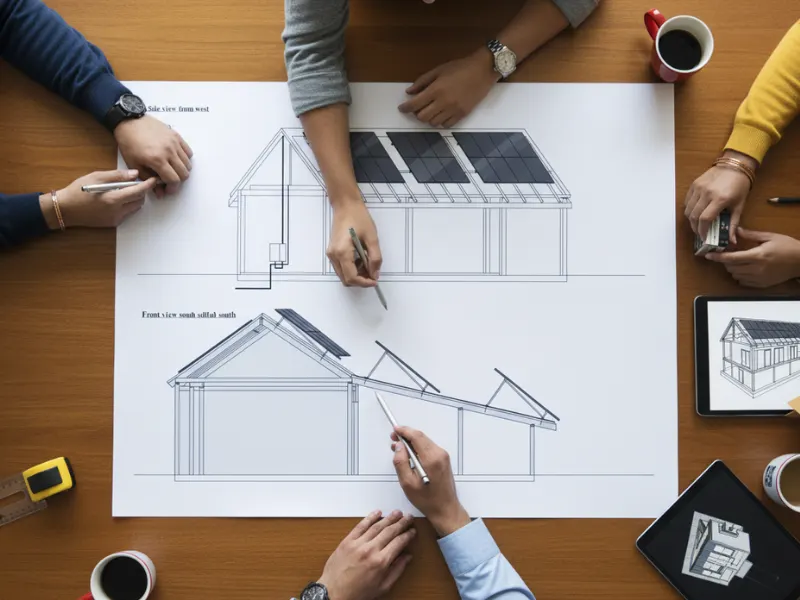

Across India’s skylines, solar panels are becoming as familiar as satellite dishes once were. But as more homeowners, developers, and businesses look to harness the sun, one question keeps emerging on project sites: is this building solar-ready?
Being “solar-ready” isn’t just about installing panels; it’s about planning for them. It means designing and constructing buildings that can seamlessly integrate solar systems now or in the future- structurally, spatially, and electrically. For a country chasing 500 GW of renewable energy by 2030, it’s a mindset shift the construction industry can’t afford to overlook.
Why Solar-Ready Matters for Indian Projects
India’s solar growth has been remarkable, yet a large portion of urban construction still treats solar integration as an afterthought. Retrofitting older roofs or rerouting electrical layouts can be costly and inefficient.
A solar-ready approach solves this by preparing the building from day one:
- Roofs designed to handle panel loads and optimal sun exposure
- Conduits and wiring paths integrated during construction
- Space allocated for inverters, meters, and maintenance access
- Shading and orientation planned to maximize efficiency
The result? Minimal rework, lower installation costs, and faster transition to renewable energy when the client decides to make the move.
What Makes a Building Solar-Ready
A solar-ready building isn’t defined by the panels on its roof but by the choices made long before construction begins. It’s a blend of smart design, adaptable infrastructure, and foresight that keeps future energy upgrades effortless.
Here’s what sets it apart:
- Structural Readiness: Roof slabs and frames are designed to handle additional weight and mounting loads of photovoltaic systems.
- Spatial Provisioning: Dedicated zones for inverters, batteries, and meters are planned early, avoiding cluttered retrofits later.
- Electrical Preparedness: Pre-installed conduits and distribution boxes simplify wiring and minimise disruption when systems are added.
- Design Foresight: Building orientation, roof slope, and shading analysis are done upfront to optimise sun exposure.
- Regulatory Compliance: Clearances and net-metering provisions are factored into documentation, saving time when solar adoption happens.
Essentially, a solar-ready building is one that’s future-proofed for energy independence — whether panels are installed on day one or years down the line.
Designing for the Sun: Key Construction Considerations
- Orientation and Roof Planning
In India, south-facing roofs with minimal obstructions capture the most sunlight. Structural engineers should factor in the additional load of panels (typically 15-25 kg/m²) when designing slabs or trusses. - Pre-Laid Electrical Infrastructure
Embedding conduits and dedicated DB connections during construction simplifies future solar setup. It’s a small investment that saves major rewiring later. - Material and Finish Choices
Light-coloured, heat-reflective roofing materials improve panel performance by reducing ambient temperature. Proper waterproofing and corrosion-resistant supports further extend system life. - Maintenance and Safety Access
Design roof walkways and inspection zones early, not as an afterthought. This ensures maintenance teams can safely clean or service panels without compromising structure or safety.
Aligning with India’s Renewable Push
Government policies such as the Rooftop Solar Programme Phase II and PM Surya Ghar Yojana are accelerating adoption across residential and commercial sectors. Yet, the challenge remains: how to integrate solar at scale when buildings weren’t originally designed for it.
That’s where the solar ready construction bridge the gap- by ensuring every new project is future-fit. Whether the panels go up today or five years from now, the structure, wiring, and layout are already prepared.
Conclusion
In a country blessed with 300 sunny days a year, overlooking solar potential is a missed opportunity. The buildings we design today will define India’s energy landscape for decades. Making them solar-ready isn’t a luxury, it’s common sense wrapped in vision.
After all, the future of energy isn’t waiting to be discovered, it’s already shining overhead.