
House Construction Cost Guide 2026: Complete Cost Breakdown for Homeowners
Building a house is one of the most significant investments most people make in their lifetime. Whether you’re planning a compact home or a luxury villa, understanding construction costs is essential for budgeting and avoiding unexpected expenses. In this comprehensive guide, we’ll explore the key factors that influence house construction costs in 2026, including material prices, labor charges, design fees, foundation costs, and project timelines.
Understanding House Construction Costs in 2026
House construction costs are influenced by several factors, including location, plot conditions, building design, material quality, labor availability, and market trends. In India, construction costs typically range from basic to premium levels depending on the specifications chosen.
Major cost components include:
- Construction materials (cement, steel, bricks, sand, aggregates)
- Labor and contractor charges
- Architectural and engineering services
- Foundation and structural work
- Electrical and plumbing installations
- Flooring, painting, and finishing
- Government approvals and permits
A well-planned budget can help homeowners control costs while maintaining construction quality.
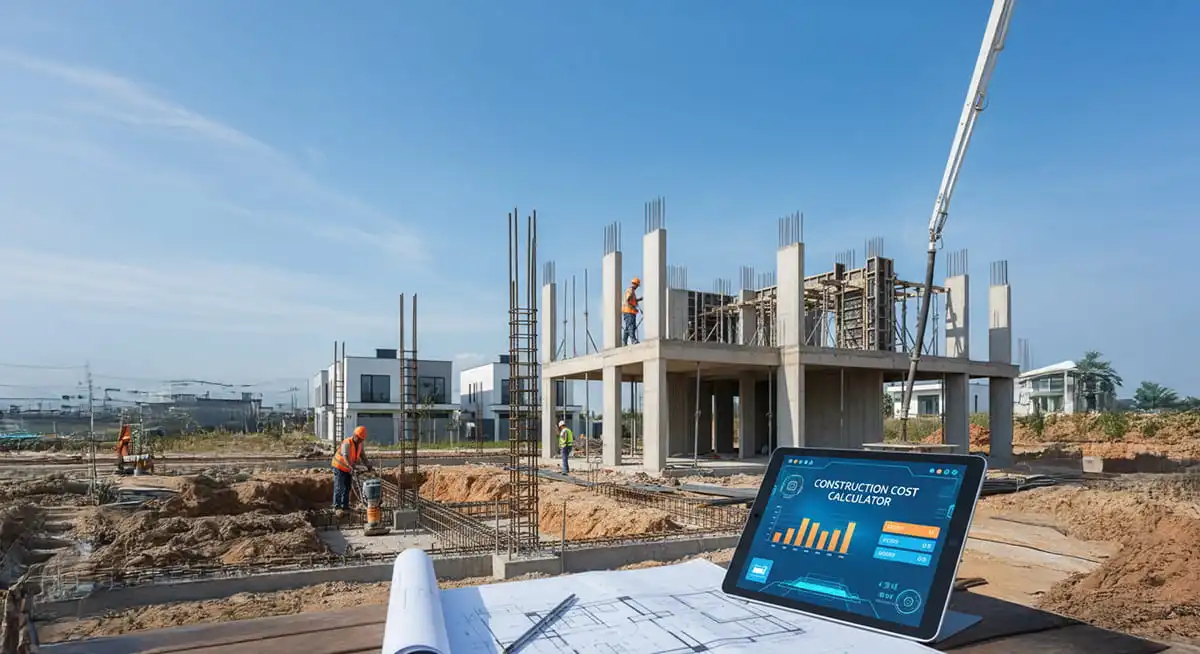
Construction Cost Calculator: Estimate Your Building Budget
A simple way to estimate construction costs is by multiplying the built-up area by the average construction rate per square foot.
Basic Formula
Total Construction Cost = Built-up Area × Cost per Sq. Ft.
Example
If your home has a built-up area of 2,000 sq. ft. and the construction cost is ₹2,200 per sq. ft.:
Estimated Cost = 2,000 × ₹2,200 = ₹44,00,000
Factors Affecting Cost per Sq. Ft.
- Location of the project
- Quality of materials
- Architectural complexity
- Number of floors
- Interior finishing level
- Labor availability
Homeowners should also allocate an additional 10–15% contingency budget for unforeseen expenses.
Cement Price Trends in 2026
Cement remains one of the most important construction materials and significantly impacts project costs.
Factors Influencing Cement Prices
- Demand from infrastructure projects
- Transportation and fuel costs
- Raw material availability
- Seasonal construction demand
- Government policies and taxation
How to Reduce Cement Costs
- Purchase in bulk quantities
- Compare rates from multiple suppliers
- Schedule purchases strategically
- Store materials properly to prevent wastage
Tracking cement prices throughout the project can help reduce overall construction expenses.
Steel Price Trends in 2026
Steel is the backbone of any reinforced concrete structure and often accounts for a significant portion of construction budgets.
Common Uses of Steel
- Foundations
- Columns and beams
- Slabs
- Staircases
- Structural reinforcement
Factors Affecting Steel Prices
- Global steel demand
- Raw material costs
- Import-export policies
- Manufacturing capacity
- Infrastructure development projects
Cost Management Tips
- Procure steel from certified suppliers
- Avoid over-ordering materials
- Conduct regular inventory checks
- Follow structural designs accurately
Effective steel management can save thousands of rupees during construction.
Labor Cost Guide 2026
Labor charges are another major contributor to overall construction costs. Labor expenses vary based on region, project complexity, and workforce availability.
Key Labor Categories
Masonry Work
Responsible for brickwork, blockwork, and plastering.
Carpentry Work
Handles shuttering, doors, windows, and wood installations.
Electrical Work
Includes wiring, switchboards, and electrical fixtures.
Plumbing Work
Covers water supply systems, drainage, and sanitary fittings.
Painting and Finishing
Includes wall preparation, painting, polishing, and final touches.
Tips for Managing Labor Costs
- Hire experienced contractors
- Establish clear contracts
- Monitor daily productivity
- Avoid project delays
- Schedule work efficiently
Well-managed labor resources can improve both quality and project timelines.
House Design Cost Guide
Architectural planning is a crucial investment that can reduce construction costs and improve functionality.
Typical Design Services
- Floor plans
- Elevation designs
- Structural drawings
- Electrical layouts
- Plumbing layouts
- 3D visualizations
Factors Affecting Design Costs
- Plot size
- Design complexity’
- Number of revisions
- Architectural firm experience
- Additional consultancy services
Benefits of Professional Design
- Optimized space utilization
- Improved aesthetics
- Better structural safety
- Lower construction errors
- Increased property value
A professionally designed home often delivers long-term savings by minimizing costly modifications during construction.
Foundation Cost Breakdown
The foundation is the most critical structural element of any building. It transfers the building load safely to the ground and ensures long-term stability.
Foundation Cost Components
Excavation
Site clearing and earthwork preparation.
PCC (Plain Cement Concrete)
Creates a stable base before reinforcement work.
Reinforcement Steel
Provides strength to the foundation.
Formwork and Shuttering
Supports concrete placement.
RCC Foundation Work
Main structural foundation construction.
Factors Affecting Foundation Costs
- Soil conditions
- Foundation type
- Water table level
- Building load
- Site accessibility
Common Foundation Types
- Isolated Footing
- Combined Footing
- Raft Foundation
- Pile Foundation
Investing in a strong foundation helps prevent structural issues and costly repairs in the future.
Construction Timeline Guide
A realistic construction schedule helps homeowners plan finances and monitor project progress effectively.
Phase 1: Planning and Approvals (1–2 Months)
- Site survey
- Architectural design
- Structural planning
- Government approvals
Phase 2: Foundation Work (1 Month)
- Excavation
- Footing construction
- Foundation completion
Phase 3: Structural Construction (3–4 Months)
- Columns and beams
- Slab casting
- Brickwork
Phase 4: Electrical and Plumbing (1–2 Months)
- Internal wiring
- Water supply systems
- Drainage installation
Phase 5: Finishing Work (2–3 Months)
- Flooring
- Painting
- Fixtures installation
- Final inspections
Phase 6: Handover and Occupancy (2–4 Weeks)
- Quality checks
- Cleaning
- Final approvals
A standard residential project generally takes between 8 and 12 months, depending on size and complexity.
Tips to Reduce House Construction Costs
- Create a detailed budget before construction begins.
- Use quality materials to avoid future maintenance costs.
- Compare supplier quotations regularly.
- Minimize design changes during construction.
- Monitor material usage and wastage.
- Hire experienced contractors and consultants.
- Plan procurement according to project phases.
- Maintain proper project supervision.
Conclusion
Building a house in 2026 requires careful planning, budgeting, and execution. Understanding the impact of cement prices, steel rates, labor charges, design fees, foundation costs, and project timelines can help homeowners make informed decisions and avoid costly mistakes.
By using a construction cost calculator, working with qualified professionals, and monitoring market trends, you can successfully complete your dream home within budget while maintaining quality and durability.
FAQs:
The average house construction cost varies depending on location, material quality, and design complexity. Basic construction may start from ₹1,800–₹2,200 per sq. ft., while premium construction can exceed ₹3,500 per sq. ft.
You can estimate the total cost using the formula:
Total Construction Cost = Built-up Area × Construction Cost per Sq. Ft.
For example, a 2,000 sq. ft. home at ₹2,500 per sq. ft. would cost approximately ₹50 lakh.
The primary cost components include:
- Cement and concrete
- Steel reinforcement
- Bricks or blocks
- Labor charges
- Architectural and engineering fees
- Plumbing and electrical work
- Flooring and interior finishes
- Government approvals and permits
Labor costs typically account for 25% to 35% of the total construction budget, depending on the project's location, complexity, and duration.
Steel requirements vary based on structural design. A typical residential building may require approximately 3–5 kg of steel per square foot of built-up area.
The quantity of cement depends on the building size, structural design, and construction method. A standard 1,500–2,000 sq. ft. house may require several hundred bags of cement throughout the project.
Material prices are influenced by:
- Raw material availability
- Transportation costs
- Fuel prices
- Market demand
- Government regulations
- Seasonal construction activity
Architect fees can vary significantly based on experience, location, and project scope. Charges may be based on a percentage of project cost, per-square-foot rates, or fixed-fee agreements.
A typical residential house takes approximately 8–12 months to complete. Larger or more complex projects may require additional time.
The ideal foundation depends on soil conditions, building load, and site characteristics. Common options include isolated footings, combined footings, raft foundations, and pile foundations.
You can reduce costs by:
- Planning your budget carefully
- Comparing material suppliers
- Avoiding unnecessary design changes
- Monitoring material wastage
- Hiring experienced contractors
- Using value-engineered construction methods
Hiring an experienced contractor is generally recommended for better coordination, quality control, and timely project completion. However, self-managed construction may offer greater control if you have sufficient technical knowledge and time.
Some commonly overlooked expenses include:
- Soil testing
- Approval and permit fees
- Water and electricity connections
- Site security
- Temporary utilities
- Landscaping
- Furniture and interiors
- Contingency expenses
Experts generally recommend setting aside 10–15% of the total project budget to cover unforeseen expenses, material price fluctuations, and design modifications.
Structural construction, including foundations, RCC work, steel reinforcement, and concrete, is typically the most expensive phase and can account for a significant portion of the total project budget.