
Introduction
The construction industry is under constant pressure to deliver projects faster, reduce costs, improve quality, and meet increasingly demanding sustainability goals. As a result, precast concrete has become one of the most preferred construction methods for architects, engineers, contractors, and developers worldwide.
Unlike traditional cast-in-place concrete, precast concrete components are manufactured in a controlled factory environment before being transported to the construction site for installation. This process ensures superior quality, reduced project timelines, and greater design flexibility.
Whether you’re designing a commercial complex, residential development, industrial facility, bridge, or infrastructure project, understanding precast concrete can help you make better construction decisions.
This comprehensive guide covers everything architects and contractors need to know about precast concrete—from its benefits and applications to design considerations, installation, and frequently asked questions.
What Is Precast Concrete?
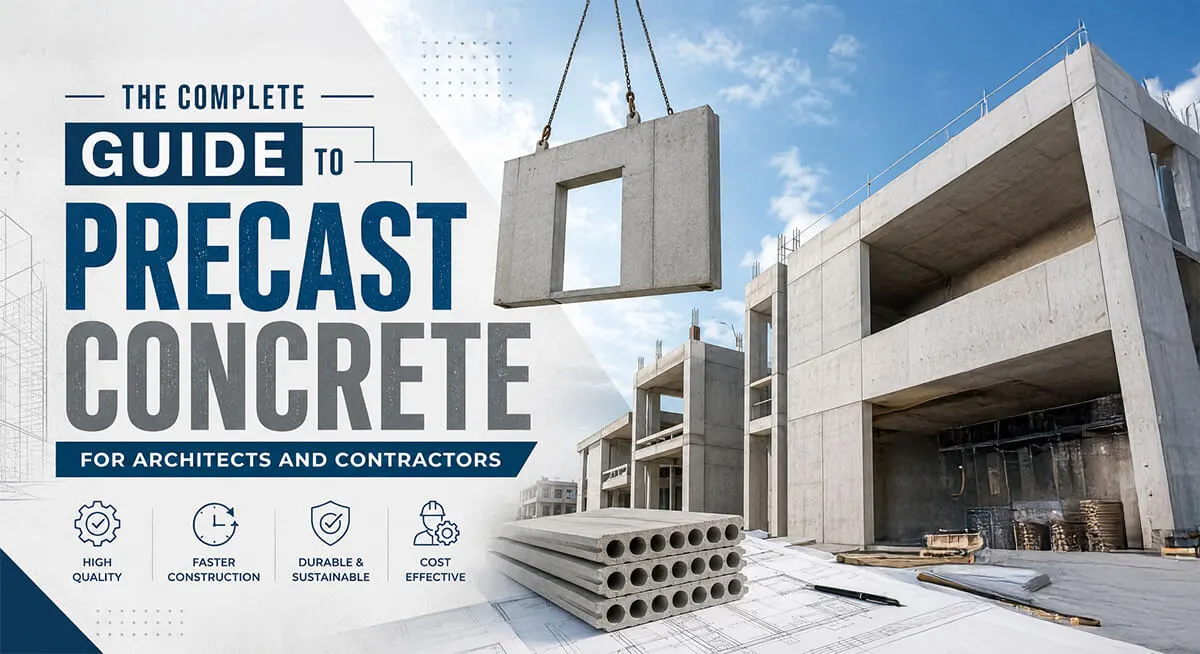
Precast concrete is a construction product manufactured by casting concrete into reusable molds under controlled factory conditions. After curing and quality inspections, the finished components are transported to the project site and assembled.
Common precast products include:
- Wall panels
- Columns
- Beams
- Floor slabs
- Staircases
- Lift shafts
- Boundary walls
- Drainage systems
- Retaining walls
- Bridge components
Because production occurs in a controlled environment, manufacturers can achieve consistent strength, dimensional accuracy, and excellent surface finishes.
Why Architects Prefer Precast Concrete
Greater Design Freedom
Modern precast technology allows architects to create buildings with unique shapes, textures, colors, and finishes. Decorative facades, curved panels, and architectural elements can all be manufactured with precision.
Faster Project Delivery
Since manufacturing and site preparation happen simultaneously, construction schedules are significantly shortened.
Superior Quality
Factory-controlled production eliminates many of the variables associated with on-site concrete pouring, leading to improved consistency and durability.
Better Sustainability
Precast manufacturing minimizes material waste, optimizes resource usage, and can incorporate recycled materials into production.
Benefits for Contractors
Faster Installation
Precast elements arrive ready to install, reducing on-site labor requirements and accelerating project completion.
Reduced Labor Costs
Less on-site formwork, reinforcement work, and curing mean fewer labor-intensive processes.
Improved Site Safety
A cleaner, more organized construction site reduces risks associated with traditional concrete work.
Predictable Scheduling
Factory production minimizes weather-related delays, allowing contractors to better manage project timelines.
Better Quality Control
Each component undergoes strict inspections before delivery, reducing rework and unexpected site issues.
Common Applications of Precast Concrete
Precast concrete is used across nearly every construction sector.
Commercial Buildings
- Office buildings
- Shopping malls
- Hotels
- Hospitals
Residential Construction
- Apartment complexes
- Villas
- Affordable housing
- High-rise buildings
Industrial Projects
- Warehouses
- Manufacturing plants
- Logistics parks
- Distribution centers
Infrastructure
- Bridges
- Flyovers
- Culverts
- Metro stations
- Railway platforms
- Stormwater drainage systems
Types of Precast Concrete Components
Commercial Buildings
- Columns
- Beams
- Floor slabs
- Foundation elements
Architectural Components
- Decorative wall panels
- Facades
- Cladding
- Balcony units
Infrastructure Components
- Pipes
- Box culverts
- Retaining walls
- Noise barriers
Design Considerations for Architects
When designing with precast concrete, architects should consider:
- Structural load requirements
- Transportation limitations
- Crane access during installation
- Joint detailing
- Building movement
- Fire resistance
- Thermal insulation
- Acoustic performance
- Future maintenance requirements
Early collaboration with the precast manufacturer helps optimize both design and production efficiency.
The Precast Manufacturing Process
- Design and engineering
- Mold preparation
- Reinforcement placement
- Concrete casting
- Controlled curing
- Quality inspection
- Storage
- Transportation
- Site installation
Every stage follows strict quality standards to ensure structural performance and durability.
Installation Process
Proper installation is essential for long-term performance.
Typical installation includes:
- Site preparation
- Delivery coordination
- Crane lifting
- Component placement
- Connection installation
- Joint sealing
- Final inspection
Experienced installation teams can assemble entire building structures within days rather than weeks.
Sustainability Advantages
Precast concrete contributes to sustainable construction by:
- Reducing construction waste
- Improving material efficiency
- Lowering on-site emissions
- Supporting energy-efficient building designs
- Providing long service life
- Reducing maintenance needs
- Enabling recyclable construction materials
Many green building projects incorporate precast systems to improve overall environmental performance.
Challenges to Consider
Although precast offers numerous advantages, successful projects require careful planning.
Potential challenges include:
- Transportation logistics
- Heavy lifting equipment requirements
- Early design coordination
- Manufacturing lead times
- Connection detailing
Working with an experienced precast manufacturer helps address these considerations during the planning stage.
Best Practices for Successful Precast Projects
- Engage the precast supplier early in the design process.
- Coordinate architectural, structural, and MEP designs before production.
- Plan transportation and lifting logistics in advance.
- Follow quality control procedures during installation.
- Conduct thorough inspections before project handover.
The Future of Precast Construction
The future of precast concrete is being shaped by digital design, automation, robotics, Building Information Modeling (BIM), and sustainable manufacturing practices. As demand grows for faster, safer, and more environmentally responsible construction, precast solutions are expected to play an even larger role in residential, commercial, industrial, and infrastructure projects.
Conclusion
Precast concrete has transformed modern construction by combining speed, quality, durability, and sustainability. For architects, it provides greater design flexibility and reliable performance. For contractors, it offers faster installation, improved productivity, and better cost control.
Whether you’re planning a residential development, commercial building, industrial facility, or infrastructure project, incorporating precast concrete into your design and construction strategy can deliver long-term value and improved project outcomes.
FAQs:
Precast concrete is manufactured in a factory and transported to the construction site, while cast-in-place concrete is poured and cured directly on-site.
Although the initial material cost may sometimes be higher, faster construction, reduced labor, lower maintenance, and improved quality often result in lower overall project costs.
With proper design, installation, and maintenance, precast concrete structures can remain durable for 75 to 100 years or more.
Yes. Precast components can be produced in a wide range of sizes, shapes, textures, colors, and finishes to meet architectural and structural requirements.
Yes. Factory-controlled production reduces waste, improves material efficiency, lowers on-site environmental impact, and supports sustainable construction practices.
Precast concrete is commonly used in residential buildings, commercial developments, industrial facilities, bridges, parking structures, schools, hospitals, and infrastructure projects.
Yes. Due to its durability and high-quality manufacturing process, precast concrete generally requires less maintenance than many traditional construction systems.
Since manufacturing takes place while site work is ongoing, installation can begin as soon as the components arrive, significantly reducing overall project duration.