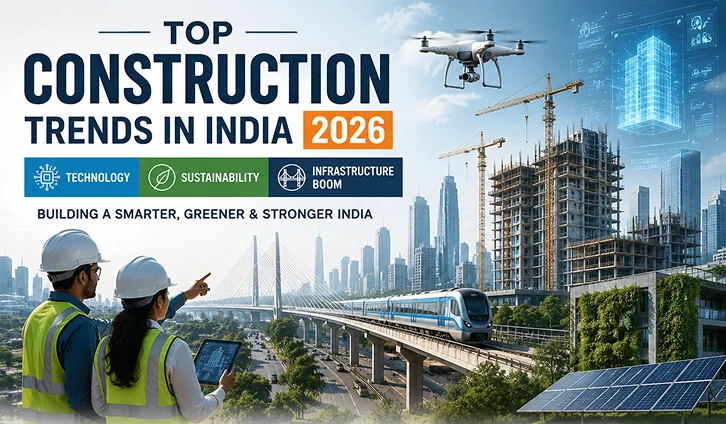

India’s construction industry is entering a transformative phase in 2026, driven by rapid urbanization, government infrastructure investments, and emerging technologies. From smart construction sites to sustainable buildings, the sector is evolving faster than ever before.
1. Rise of Smart Construction Technologies
The integration of AI, IoT, and data analytics is reshaping construction project management. Companies are increasingly adopting predictive analytics to reduce delays and cost overruns.
- AI-based scheduling tools
- IoT-enabled equipment monitoring
- Digital twins for real-time project tracking
👉 These innovations improve efficiency, safety, and decision-making.
2. Green & Sustainable Construction
Sustainability is no longer optional—it’s becoming mandatory.
- Energy-efficient buildings
- Use of recycled and eco-friendly materials
- Adoption of green certifications
India is moving toward net-zero buildings, especially in metro cities.
3. Infrastructure Boom & Government Push
Large-scale infrastructure projects are a major growth driver.
- Highways, expressways, and metro rail expansion
- Smart Cities Mission
- Industrial corridors and logistics parks
Government initiatives are significantly boosting construction demand.
4. Prefabrication & Modular Construction
Prefabricated and modular construction methods are gaining traction.
- Faster project completion
- Reduced labor dependency
- Cost efficiency
These methods are especially useful for urban housing and commercial projects.
5. Growth in Industrial & Energy Projects
Construction demand is rising in sectors like:
- Renewable energy (solar & wind farms)
- Data centers and IT parks
- Warehousing and logistics
India’s energy transition is fueling construction activity.
6. Workforce & Skill Transformation
The industry is facing a shift in workforce requirements.
- Demand for skilled labor
- Adoption of automation reducing manual dependency
- Training programs for modern construction techniques
7. Challenges in the Industry
Despite growth, several challenges persist:
- Rising material costs
- Project delays
- Regulatory approvals
- Labour shortages
Conclusion
The construction industry in India in 2026 is defined by innovation, sustainability, and massive infrastructure development. Companies that embrace technology and adapt to changing trends will lead the future.
FAQs:
AI adoption, green construction, infrastructure growth, and modular building methods are key trends.
It reduces environmental impact, lowers energy costs, and aligns with global climate goals.
Technologies like AI, IoT, and BIM improve efficiency, reduce delays, and enhance safety.
Cost inflation, labour shortages, and regulatory hurdles remain major concerns.
The sector is expected to grow steadily with increased investment in infrastructure and smart technologies.