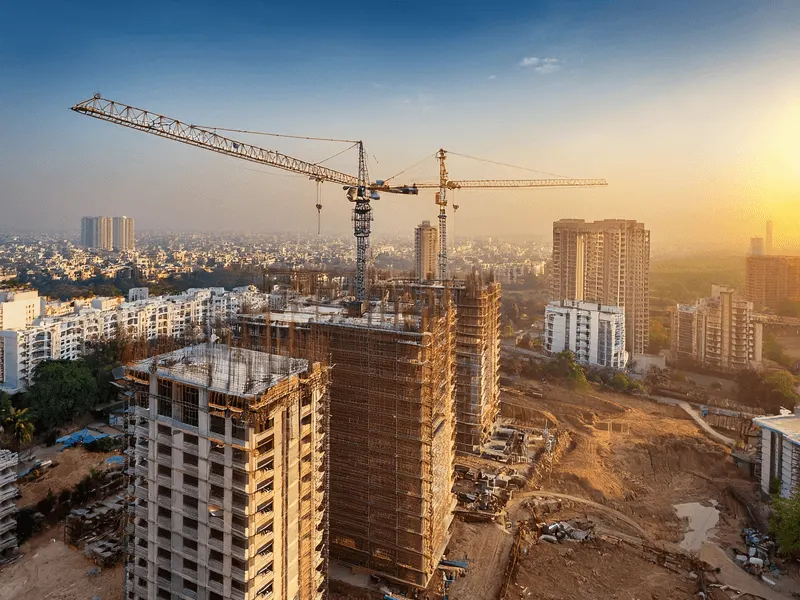

Ahmedabad has emerged as one of India’s fastest-growing urban centers, with rapid expansion in residential, commercial, and infrastructure development. New projects are being launched and delivered at an unprecedented pace, reflecting the city’s economic momentum and growing demand.
But amid this growth, a critical question demands attention:
Are we building fast — or building right?
The Growing Concern Around Construction Quality
Speed has become a defining metric in today’s construction industry. Faster delivery often translates into quicker returns, increased project turnover, and competitive advantage. However, this race against time can sometimes overshadow the most important aspect of construction — quality.
Recent infrastructure concerns in Ahmedabad have brought this issue into sharper focus. A widely reported case involving the demolition of a newly constructed flyover within just a few years of completion raised serious questions about durability, execution standards, and long-term planning. Such incidents are not merely technical failures; they impact public trust, safety, and the credibility of the entire ecosystem.
At a broader level, the Indian construction industry continues to grapple with challenges such as project delays, cost overruns, and inconsistencies in execution quality. These issues often stem from gaps in planning, coordination, and on-site quality control.
The Hidden Cost of Compromising Quality
When construction quality is compromised, the consequences extend far beyond immediate project concerns:
- Structural Risks: Poor execution can lead to safety hazards and reduced lifespan of structures
- Financial Losses: Rework, repairs, or demolition significantly increase project costs
- Delays in Utilization: End users and stakeholders face inconvenience and uncertainty
- Loss of Trust: Developers and contractors risk long-term reputational damage
Construction is not just about completing a structure — it is about creating assets that are safe, durable, and reliable for decades.
Why the Industry Needs a Shift in Mindset
The need of the hour is a shift from a speed-driven approach to a quality-driven approach. While timelines are important, they should never come at the cost of engineering integrity.
A quality-focused construction approach requires:
- Robust Planning & Design: Detailed engineering and coordination before execution
- Standardized Processes: Defined systems to ensure consistency across every stage
- Material Quality Assurance: Use of tested and certified materials
- On-Site Monitoring: Continuous supervision and adherence to quality benchmarks
- Skilled Workforce & Training: Ensuring teams are equipped to deliver precision
When these elements are aligned, projects not only meet timelines but also exceed expectations in performance and durability.
Building the Right Way: The BlueWing Approach
At BlueWing, we believe that construction is a long-term responsibility, not a short-term task. Every project we undertake is guided by a commitment to quality, accountability, and engineering excellence.
Our approach focuses on:
- Engineering-Led Execution: Strong technical foundation driving every decision
- System-Driven Project Management: Structured workflows to minimize errors and delays
- Strict Quality Control: Multi-level checks at every stage of construction
- Safety-First Culture: Ensuring the well-being of everyone on site
- Transparency with Clients: Clear communication and accountability throughout the project lifecycle
We understand that every structure we build represents not just a project, but a promise — a promise of reliability and trust.
Conclusion: Building for the Future
As Ahmedabad continues to grow, the focus must shift from simply building more to building better. The future of construction lies in balancing speed with quality, innovation with responsibility, and ambition with accountability.
Because in the end, the true success of any construction project is not measured by how quickly it is completed —
but by how well it stands the test of time.
FAQs:
Construction quality is crucial in Ahmedabad due to the city’s rapid urban growth and increasing infrastructure demand. High-quality construction ensures durability, safety, and long-term value, while poor quality can lead to structural failures, costly repairs, and safety risks.
Some of the most common reasons include:
- Inadequate planning and design
- Use of low-quality materials
- Lack of skilled labour
- Poor site supervision
- Pressure to complete projects quickly
These factors can significantly impact the strength and lifespan of a structure.
Construction companies can improve quality by:
- Following proper engineering and design processes
- Using certified and tested materials
- Implementing strict quality control systems
- Conducting regular site inspections
- Hiring experienced professionals
A system-driven approach ensures consistency and reliability.
Poor construction quality can lead to:
- Structural damage or failure
- Increased maintenance costs
- Project delays and rework
- Safety hazards
- Loss of trust among clients and stakeholders
In the long run, it affects both financial and reputational aspects.
When selecting a construction company, consider:
- Experience and past projects
- Quality control processes
- Technical expertise and engineering strength
- Transparency in communication
- Commitment to safety and timelines
Choosing the right partner ensures smooth execution and long-term reliability.
Turnkey construction is a project delivery method where a single company handles everything — from design and planning to execution and handover.
It offers benefits like:
- Single point of responsibility
- Better coordination
- Time and cost efficiency
- Reduced risk for clients
Investing in quality construction reduces the need for frequent repairs, maintenance, and structural corrections. It also enhances the lifespan of the building, making it more cost-effective over time.
Modern technologies like BIM (Building Information Modeling), project management software, and real-time monitoring tools help improve accuracy, coordination, and quality control in construction projects.
Not necessarily. Fast construction can maintain quality if supported by proper planning, skilled execution, and system-driven processes. The risk arises when speed is prioritized over engineering standards and quality checks.
A quality-focused company like BlueWing ensures:
- Engineering-driven execution
- Strict quality control at every stage
- Transparent communication
- Timely and reliable project delivery
This results in durable, safe, and high-performance structures.