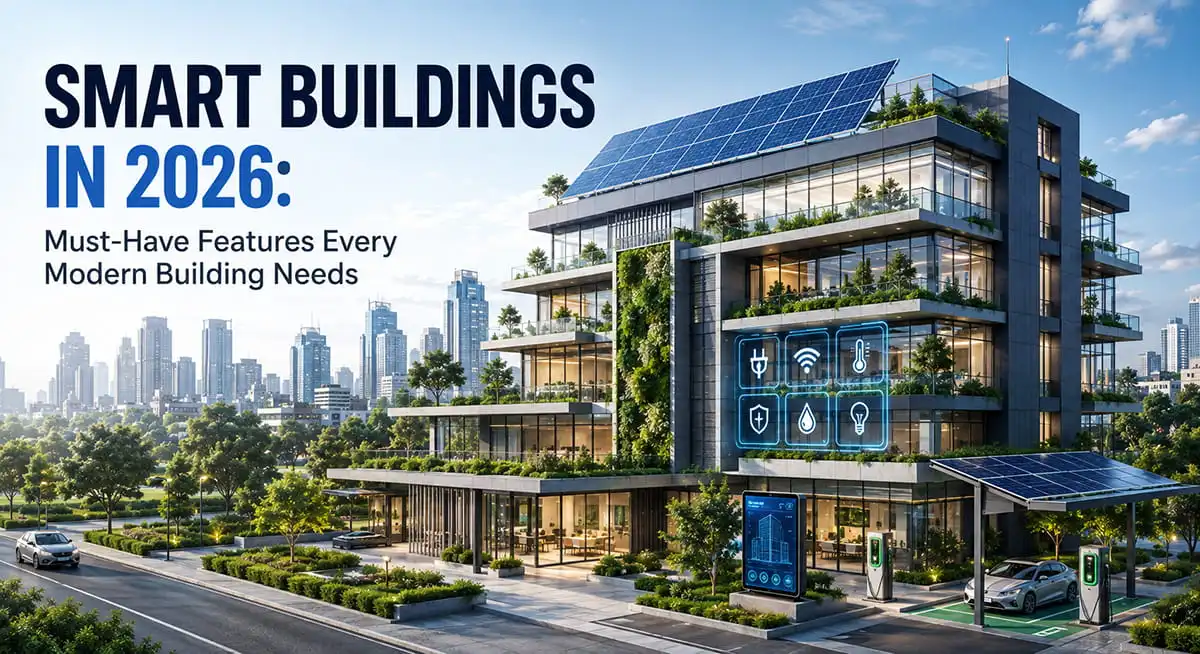

Smart Buildings in Gujarat 2026: Must-Have Features Every Modern Construction Project Needs
Gujarat’s skyline is changing rapidly. From high-rise commercial towers in Ahmedabad and GIFT City to premium residential projects in Surat, Vadodara, and Rajkot, the construction industry is embracing a new era of intelligent infrastructure.
In 2026, a modern building is no longer defined only by its design or location. Buyers, tenants, and businesses are looking for spaces that are energy-efficient, secure, sustainable, and equipped with smart technology that makes everyday life easier.
As the state continues to attract industries, IT companies, startups, and global investors, developers are increasingly integrating smart building solutions into new projects. These technologies not only improve operational efficiency but also enhance occupant comfort and increase long-term property value.
Let’s explore the smart building features that are becoming essential for modern construction projects across Gujarat.
Why Smart Buildings Are Gaining Popularity in Gujarat
Gujarat has always been known for its strong industrial growth and business-friendly environment. Today, the state’s construction sector is evolving to meet new expectations around sustainability, digital transformation, and energy efficiency.
Several factors are driving this shift:
- Growing demand for premium residential and commercial spaces
- Rising electricity and maintenance costs
- Government initiatives promoting sustainable development
- Expansion of smart cities and urban infrastructure
- Increased awareness about green and energy-efficient buildings
Whether it’s a corporate office in Ahmedabad or a luxury apartment in Surat, technology is becoming an integral part of modern building design.
1. Smart Energy Management Systems
With energy costs continuing to rise, developers are focusing on solutions that reduce electricity consumption without compromising comfort.
Smart energy management systems monitor power usage in real time and automatically optimize lighting, air conditioning, and other electrical systems based on occupancy and usage patterns.
For commercial buildings, this can significantly lower operational expenses. For residential societies, it translates into reduced maintenance costs and a more sustainable lifestyle.
2. Intelligent HVAC Systems
Gujarat experiences long summers and high temperatures for much of the year, making air conditioning one of the largest contributors to energy consumption.
Modern HVAC systems use occupancy sensors, weather data, and automation to cool spaces only when needed. Instead of running at full capacity throughout the day, these systems adjust according to actual usage, improving comfort while saving energy.
For offices, shopping centres, hospitals, and hotels, this is becoming a valuable long-term investment.
3. Advanced Security and Digital Access
Security expectations have evolved significantly.
Modern buildings are replacing traditional keys and access cards with smarter solutions such as:
- Mobile-based entry
- Facial recognition
- QR code visitor management
- Smart surveillance cameras
- Remote access monitoring
These technologies provide better security while making entry and visitor management more convenient for residents, employees, and guests.
4. IoT-Based Building Automation
The Internet of Things (IoT) connects different building systems through smart sensors.
These sensors monitor:
- Temperature
- Humidity
- Lighting
- Water consumption
- Air quality
- Occupancy
- Equipment performance
By collecting real-time data, buildings can automatically respond to changing conditions, creating a more efficient and comfortable environment.
5. Water Management Solutions
Water conservation is becoming increasingly important across Gujarat, especially in rapidly growing urban areas.
Smart water management systems help buildings monitor consumption, detect leakages early, and optimize water distribution.
Many new projects are also combining these systems with rainwater harvesting and recycled water solutions to reduce overall water usage.
6. Predictive Maintenance
Unexpected equipment failures can lead to expensive repairs and inconvenience for occupants.
Predictive maintenance uses AI and connected sensors to monitor elevators, pumps, electrical panels, generators, and HVAC equipment. Instead of waiting for something to break down, maintenance teams receive alerts when equipment starts showing signs of wear.
This approach reduces downtime and extends the lifespan of critical building infrastructure.
7. Sustainable and Green Building Practices
Sustainability is no longer just a trend—it has become a key consideration for developers and property buyers alike.
Many new construction projects in Gujarat now incorporate:
- Solar power systems
- LED lighting
- Rainwater harvesting
- Waste management solutions
- Energy-efficient materials
- Smart irrigation systems
These features reduce environmental impact while lowering long-term operating costs.
8. Smart Lighting Systems
Lighting plays an important role in both energy efficiency and occupant comfort.
Smart lighting systems automatically adjust brightness based on natural daylight and occupancy. Common areas, parking spaces, corridors, and offices only use the amount of lighting that is actually needed.
This not only reduces electricity bills but also improves the overall user experience.
9. Occupant-Centric Smart Features
Today’s buyers expect more than just quality construction—they want convenience.
Modern residential and commercial buildings increasingly offer mobile applications that allow users to:
- Book common amenities
- Reserve parking spaces
- Receive visitor notifications
- Report maintenance issues
- Access digital community services
- Manage entry through smartphones
These features create a seamless experience for residents and businesses alike.
10. AI-Driven Building Management
Artificial Intelligence is transforming the way buildings operate.
Instead of relying on manual monitoring, AI analyses data from multiple systems and identifies opportunities to improve efficiency.
It can automatically adjust energy usage, detect unusual equipment behaviour, optimize maintenance schedules, and generate performance insights that help facility managers make informed decisions.
As more projects adopt AI-powered building management systems, buildings become smarter with every passing day.
How Smart Buildings Benefit Gujarat’s Real Estate Market
The adoption of smart technologies offers benefits for everyone involved.
For developers, smart features increase property value and make projects more attractive to buyers.
For businesses, intelligent buildings reduce operational costs while creating healthier and more productive workplaces.
For homeowners, these technologies improve safety, comfort, convenience, and long-term savings.
As demand for sustainable and technology-enabled spaces continues to grow, smart buildings are becoming a competitive advantage rather than a luxury.
Looking Ahead
The future of construction in Gujarat is being shaped by innovation. Projects being planned today are expected to meet higher standards of efficiency, sustainability, and digital integration than ever before.
As cities like Ahmedabad, Surat, Vadodara, Rajkot, and GIFT City continue to expand, developers who embrace smart building technologies will be better positioned to meet the evolving expectations of buyers and businesses.
Smart buildings are no longer just about automation—they are about creating spaces that are efficient, adaptable, and built for the future.
Conclusion
Gujarat’s construction industry is entering an exciting phase where technology and infrastructure go hand in hand. Smart buildings are helping developers create projects that are energy-efficient, environmentally responsible, and designed around the needs of modern occupants.
Whether it’s intelligent energy management, AI-powered maintenance, advanced security, or sustainable design, these features are quickly becoming the benchmark for quality construction across the state.
For developers, architects, and property owners, investing in smart building technology today is not just about keeping up with trends—it’s about building spaces that remain relevant, efficient, and valuable for years to come.